Li Ning, a homegrown Chinese brand, recently caused a stir when its new military-like hats on the runway.
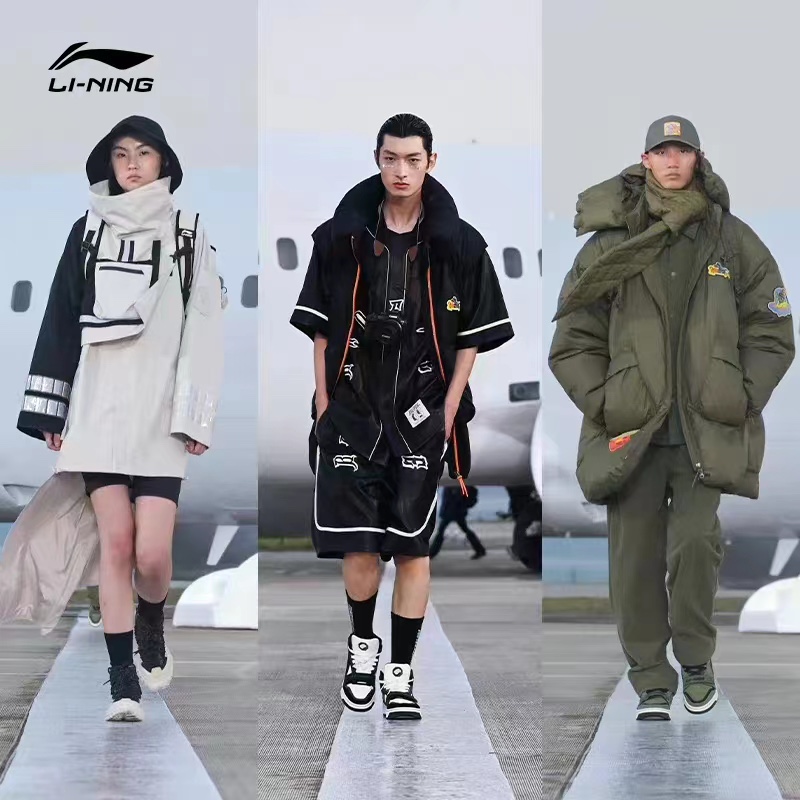
It is interesting to see, so far I have only seen the monotonous criticism from we-media, mainstream media make little buzz. I guess it is because, first, they don’t want to offend the brands (their advertisements clients); Second, they did not want to get involved in the debate that is possibly relevant with political statement.
Well, here is what I have heard and seen:
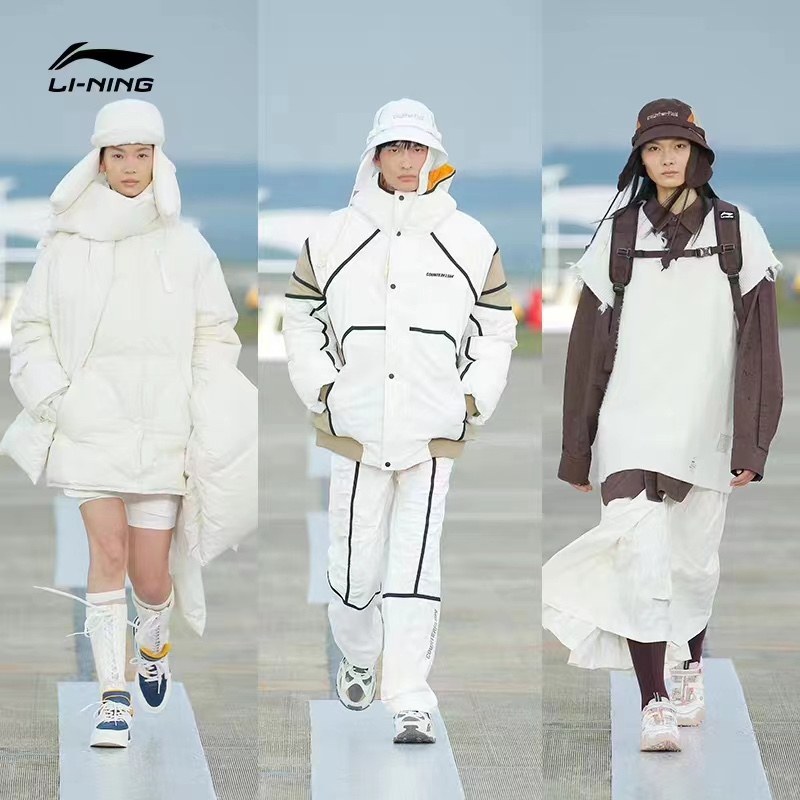
Li Ning’s big show was presented in September. No any news broke out at the time. It suddenly broke out in the midst of national attention to the 20th CPC National Congress, why? First, most of the we-media are just swimming with the streamThey don’t know or care what the truth is, and, someone ‘made’ the news intentionally.
Li Ning’s CEO now is a Japanese-Chinese, it is now considered to be one of the evidences to prove Li Ning brand is pro-Japanese.
As a matter of fact, it is very common that today China’s top shoes and clothing brands employing foreigners. Chinese companies hired foreign employees since almost 20 years ago. Of the local Chinese sports brands, most of their foreignemployees come from Americans, Japanese and Koreans Most of the American employees come from Nike background; Japanese and South Korean employees know more about the Asian market than American and European, especially in the area of design, they have better understanding of the features of Asian body (which is especially important for sports products). They are better than Chinese designers in capturing international fashion trends and customizing the international trends to suit for Asian markets. In general, Korean and Japanese designers can balance creativity, the trend and customers’ needs more adequately. Most importantly, they offer better cost performance. There are top Chinese designers too, but believe it or not, they can’t compete with Japanese and Korean employees in terms of cost performance, they are too expensive for companies.
Li Ning’s CEO now is actually a Japanese-Chinese. Li Ning has been using foreigners for more than a decade. The previous ones were American-born-Korean. That is to say, when the masses of netizens shout “Li Ning is China’s first national street-wear brands”, they are buying products from companies managed by these foreigners.
Will those who previously praised Li Ning’s products for their nice design and acclaim Li Ning as the representative of Chinese national street-wear brand regret buying products from a company managed by foreigners? Do authentic consumers really care whether the company behind the brandis managed by a Chinese or not, or do they just care the products? To consumers, does it really matter what nationality the manager is?
Back to the issues caused by the product. Is there something wrong with this product? What do you think? The pictures pieced together by we-media, as well as the misleading from we-media, are indeed problematic. Very few of them saw the whole collections of the show. Regarding the hat that caused critiques, some people associate itsdesign with the Russian hat, some associate it with the Military hat. Most people won’t have a problem with it if it is presented with the whole series. That’s why it didn’t blow up right after the show because the general public didn’t see the whole series had any problem.
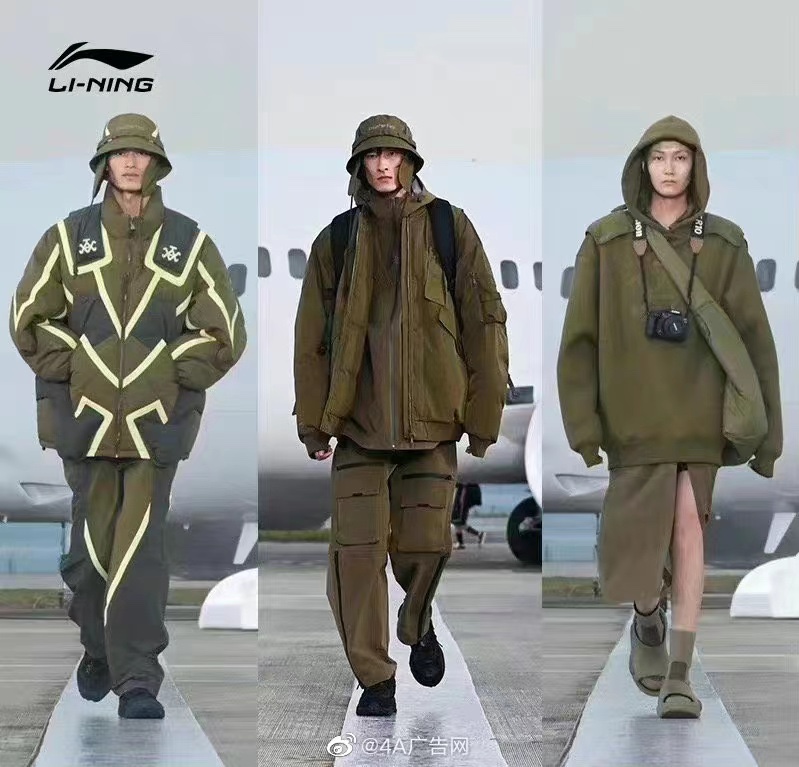
Therefore, back to theory of media propagation, what you see is what the media want you to see.
Is Li Ning’s explanation of the design inspiration an insult to consumers’ intelligence? An employee of Li Ning stood out and explained the source of design inspiration on social media, but his explanation was considered an arrogant insult to public intelligence! Because he stated that “(Chinese) consumers need education”, the word of ‘education’ irritated many of the audience, they considered this arrogance from Li Ning and offense toward them.
Here comes another issue: the relationship between brands and consumers. Are brands qualified to ‘educate’ consumers? Or is it too arrogant to “educate” our consumers.
Let’s take another approach. Some people argue this is an issue about ‘nationalism’, so Li Ning’sexplanation of the design inspiration is regarded asignoring the feeling of the ‘nation’ Here comesanother question: is what many people think of as a “national problem” really a “national problem”? It’s a matter of which one is more important: managing one’s emotion or sticking to the truth? Should brands stick to what they believe to be the truth or take what the media call “the feelings of consumers” as the priority? Whether to give up what you believe to be the truth and convey the facts (such as the inspiration explained here) in order to soothe the feelings of consumers?
So what’s the truth? The truth is that this is just an internal rivalry of Chinese domestic brands, and the vast number of netizens are just taken advantage ofas a propaganda tool. This kind of internal rivalry has always been there. There was, there is, and there will be.
This is undoubtedly a sad truth! Chinese brands need to compete with not only the brands abroad, but also the brands at home!
Translated by Gu Zhenheng
 CHINA FASHION BUSINESS
Leave a comment