
🔽The following discussion and summary from the Coldy Fashion Circle address industry-related issues. These insights are the product of collective wisdom and do not represent individual opinions. The aim is to benefit industry professionals.

Apparel Design and Development Process
1. Current Apparel Design and Development Process
This is a relatively new fashion design and development process in academia. However, the target audience is primarily European brands, which might differ from domestic practices. Please feel free to share your development process experiences.
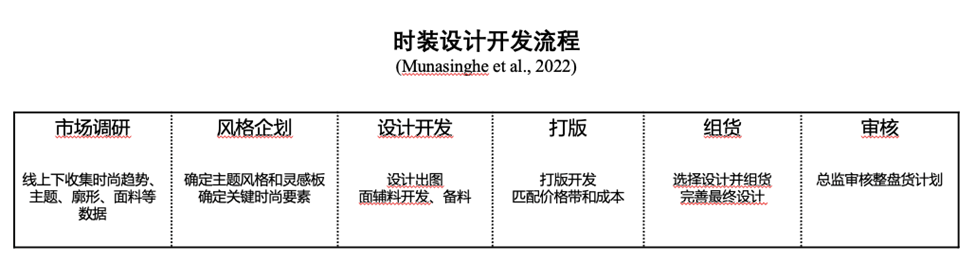
(SOURCE:Munasinghe, P. D., Dissanayake, D. G. K., & Druckman, A. (2022). An investigation of the mass-market fashion design process. Research Journal of Textile and Apparel, 26(4), 323-342.)
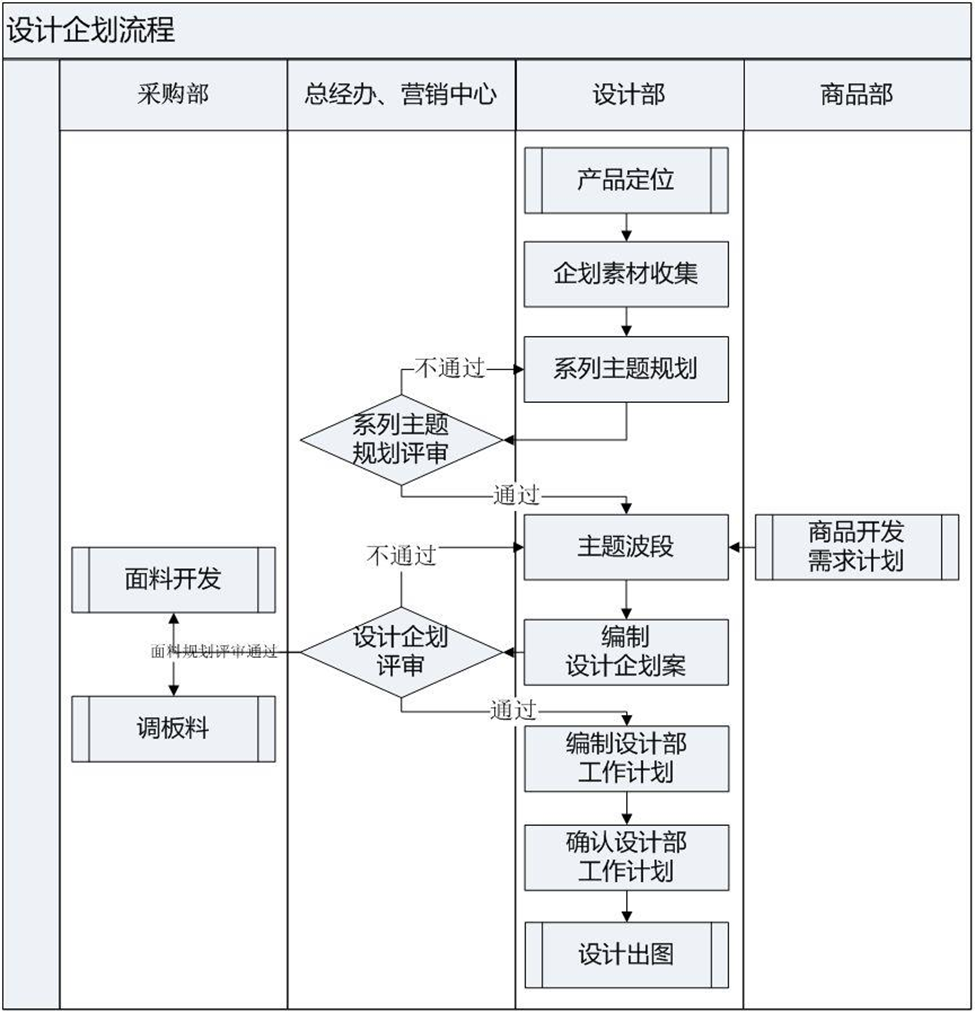
(SOURCE:https://www.sohu.com/a/396104278_186278)
From my experience at UR, the process is mostly similar, but I found a more detailed version.
This process distinctly outlines the responsibilities and roles of different departments in the design and development process. Apart from the design department, there are also the merchandise department, the fabric and accessory development department, operations, and others.
I wonder if anyone’s company involves the retail department in the design and development phase?
The extent of retail department involvement in the apparel design and development process varies by brand. Some brands include experienced stylists from retail stores directly in the merchandise selection and assortment phases. These stylists not only provide specific suggestions on styles and technical details but also share successful cases from other brands in the market. However, while retail is the most direct channel to connect with customers and gather feedback, many companies currently lack an effective mechanism to convey this valuable information to the design center. In the product development stage, especially among European brands, the planning department typically leads, coordinating both the merchandise and retail departments. New season product development often adopts a dual-management approach, with the design director and management jointly steering the direction. The retail department’s main responsibility is to conduct in-depth analyses of historical sales data, including the performance of agents, procurement situations, and self-owned retail channel performance. Merchandise planning integrates this information into a detailed summary that clearly defines price ranges, successfully sold product categories, and popular design styles in the market.
2. Pain Points in the Current Development Process: Which Steps Are Time-Consuming, Inefficient, and Need Optimization?
Designers generally evaluate retail suggestions based on their feasibility, particularly when backed by specific sales data. Opinions from the merchandise and retail departments are often valued as they directly reflect market demand.
In the design and development process, fabric development is an essential but time-intensive step. Designers need to personally engage in market research and attend fabric exhibitions. Although some fabric suppliers provide on-site services, hold regular recommendation sessions, and showcase sample garments, smaller brands often need to visit fabric markets themselves to find suitable materials. Fabric markets not only display the latest material types but also offer direct feedback from the market.
Regarding customer information, designers often report insufficient channels for data collection. They lack a deep understanding of buyers’ actual needs and satisfaction levels, directly impacting design accuracy and potentially leading to resource waste in fabric sampling. While some companies generate customer profiles, the absence of dedicated Customer Relationship Management (CRM) departments still poses challenges in collecting customer feedback. Offline customers, even if dissatisfied with a product, rarely leave specific feedback, and online reviews tend to have low engagement rates.
Efficiency issues in the workflow are evident in steps like image collection, drawing design sketches, and matching fabrics with styles. Design teams need to filter images that match the theme one by one on fashion trend websites, which is an extremely time-consuming process, often resulting in delays in garment completion.
The sample garment production stage also faces time constraints. As suppliers of finished garments, they not only need to handle delayed development materials from designers but also coordinate the sampling and pattern-making cycles of fabrics and accessories. They must address multiple challenges, such as production efficiency, qualification rates, and capacity. Discrepancies between fabric and finished garments also significantly impact product quality and development efficiency.
When seeking solutions, the industry has started exploring whether AI technology could assist in collecting and analyzing customer information. Academic research has already been conducted in this direction, which might offer new ideas for improving design and development efficiency.
These issues reflect systematic challenges in the apparel industry’s design and development process, particularly in coordinating departmental collaboration and improving work efficiency. Solving problems like better integration of retail market feedback, increasing fabric development efficiency, and enhancing customer information collection are critical.
3. Optimizing the Design and Development Process
The industry is exploring various technological approaches to improve efficiency and reduce errors. For example, 3D modeling technology, as an auxiliary tool, can help preview the effect to some extent. Designers use tools like AI or Photoshop to simulate the display effect of garments on racks or fabric matching effects. However, these tools can only serve as preliminary references; final results still rely on actual sampling.
In competitive product analysis, the primary difficulty is the tedious data collection process. Designers need to manually gather information about competitors, lacking automated tool support. While AI technology can simplify steps like image collection and product data organization to some extent, it cannot entirely replace the depth of manual analysis.
Cross-departmental communication presents several specific issues. For example, in style review meetings, feedback is often too vague, using terms like “grand,” “premium,” or “not appealing.” These subjective descriptions lack clear direction. To address this, some companies have adopted structured review methods, distributing detailed evaluation forms for multi-dimensional assessment and requiring actual wear trials. This ensures feedback is more specific, identifying whether adjustments are needed in the silhouette, color, or other aspects.
The conversion process from drawings to prototypes is also a key stage. The discrepancy between fabric photos and actual materials often impacts the final garment effect. At the same time, obtaining authentic customer feedback remains an unsolved problem. Although AI technology continues to evolve, its “digestive capability” is still insufficient to meet the complex demands of the design and development process.
Key Challenges in the Industry:
- The collection process for competitor data and market trend information is time-consuming and lacks efficient automated tools.
- Fabric development heavily relies on offline physical confirmation; photos alone cannot accurately reflect fabric properties and effects.
- Customer feedback channels are inadequate, making it difficult to obtain actionable user insights.
- Cross-department communication barriers, particularly in product review stages, often result in feedback lacking clear direction or actionable insights.
These challenges highlight the practical difficulties of digital transformation in the apparel industry. While various technological tools can assist in certain areas, achieving genuine efficiency improvements requires continued efforts in workflow optimization and communication mechanism enhancement.

How AI Can Assist in Apparel Design and Development
1. Principles and Current Status of AI Applications in Apparel Design and Development
This section explores how AI is currently applied in apparel design and development, focusing on its principles and development status. The most commonly used AI technologies include machine learning (ML), computer vision (CV), natural language processing (NLP), and generative adversarial networks (GANs). While this section might seem somewhat technical, common examples are provided for better understanding.

(SOURCE: Imtiaz, A., Pathirana, N., Saheel, S., Karunanayaka, K., & Trenado, C. (2024). A Review on the Influence of Deep Learning and Generative AI in the Fashion Industry. Journal of Future Artificial Intelligence and Technologies, 1(3), 201-216. )
- Machine Learning (ML): ML analyzes large datasets through algorithms to identify patterns and rules, enabling predictions based on user preferences and market trends. It is widely used in personalized recommendation systems. For example, Taobao’s product recommendations and TikTok’s video algorithms suggest items based on browsing and purchase history.
- Computer Vision (CV): CV has relatively broader applications in design and development. This technology allows computers to “understand” images and videos by analyzing their content using deep learning models. Examples include Taobao’s image search function and AI tools that dissect different clothing components from images.
- Natural Language Processing (NLP): NLP enables computers to understand and process human language, including text and speech. Common applications include chatbot customer service systems and virtual assistants like Siri, which can provide information about products or help users find specific apparel. NLP can also collect and analyze product reviews from social media platforms.
- Generative Adversarial Networks (GANs): GANs are deep learning models comprising a generator and a discriminator, capable of creating realistic images. A common but often overlooked application is CAPTCHA images (e.g., “select all images with bicycles”), where all images are GAN-generated. In apparel design, GANs are used for image synthesis, generating new designs. Designers can input specific parameters, and the system produces diverse design options. Examples include tools like MidJourney and LookAI.
AI technologies, such as expert systems, also play a role but require substantial amounts of data to train their models effectively.
Current AI Applications in the Apparel Industry
In the design and development stage, AI is primarily focused on generating designs and collecting/analyzing fashion trends. While tools like MidJourney and LookAI are commonly used to generate design options, the application of AI in trend analysis remains largely confined to academic research rather than commercial use.
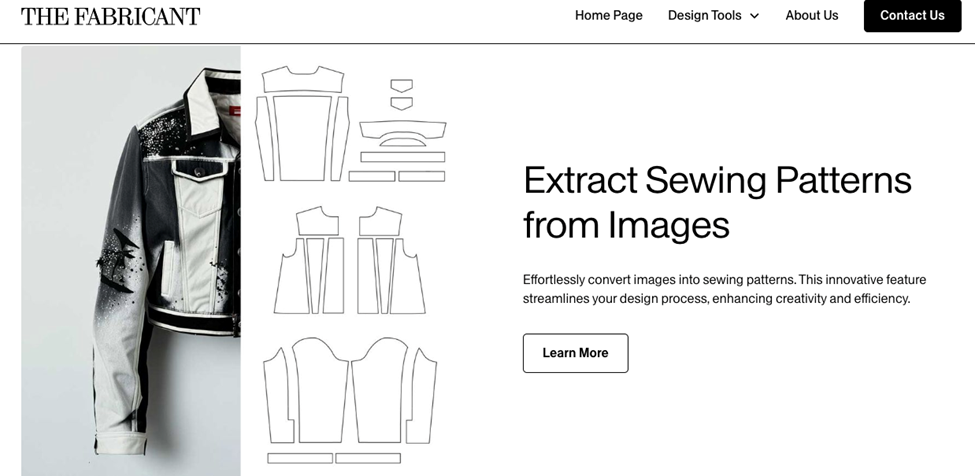
(SOURCE:https://www.thefabricant.ai/)

(SOURCE:https://www.thefabricant.ai/)
Examples of AI tools include:
- DeepFashion: This website assists designers in managing collections.
- The Fabricant: A tool that focuses on sketch generation and pattern-making diagrams, with some commercial collaborations.
- Vue.ai: A comprehensive digital platform that automates many data-driven tasks, making it particularly friendly for small and medium-sized businesses without IT development capabilities.
AI applications have also expanded into areas like fabric pattern and embroidery design. Designers use tools like MidJourney for creative exploration and test user engagement with AI designs on social media platforms.
2. Pain Points in Apparel Design and Development That AI Can Optimize
Currently, most companies use relatively primitive management methods, such as organizing files by season and series on cloud storage systems. While basic searches by style number are possible, overall management efficiency remains low. Some companies delegate pattern-related data to specialized departments, which, while practical at an execution level, will require more refined approaches as businesses grow.
Examples of AI tools addressing these issues include:
- The Fabricant: This tool generates design sketches alongside pattern diagrams and is already in use by some brands.
- Vue.ai: It automates data-driven tasks, making it suitable for small businesses without IT development capabilities.
The integration of AI with 3D technology is another area of active exploration. While rapid modeling techniques exist, their precision remains a challenge. Combining AI with 3D modeling could significantly enhance the design process.
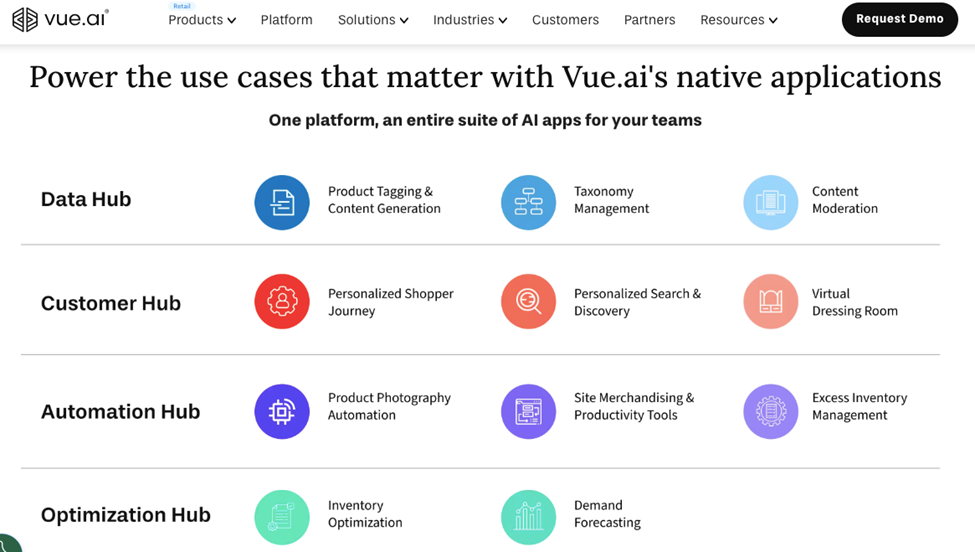
(SOURCE:https://www.vue.ai/industries/ai-in-ecommerce/ )
However, current AI tools have limitations. For instance, MidJourney has a limited pattern database and does not support custom pattern imports, which presents a bottleneck for designers specializing in niche categories. These limitations are expected to improve with continued AI advancements.
Designer Expectations and Future Directions for AI Tools
Designers hope AI tools can free up more time for core tasks such as cross-department communication, fabric matching, and pattern exploration. This need is particularly pronounced for small brands with limited resources, emphasizing the importance of user-friendly and practical AI platforms.
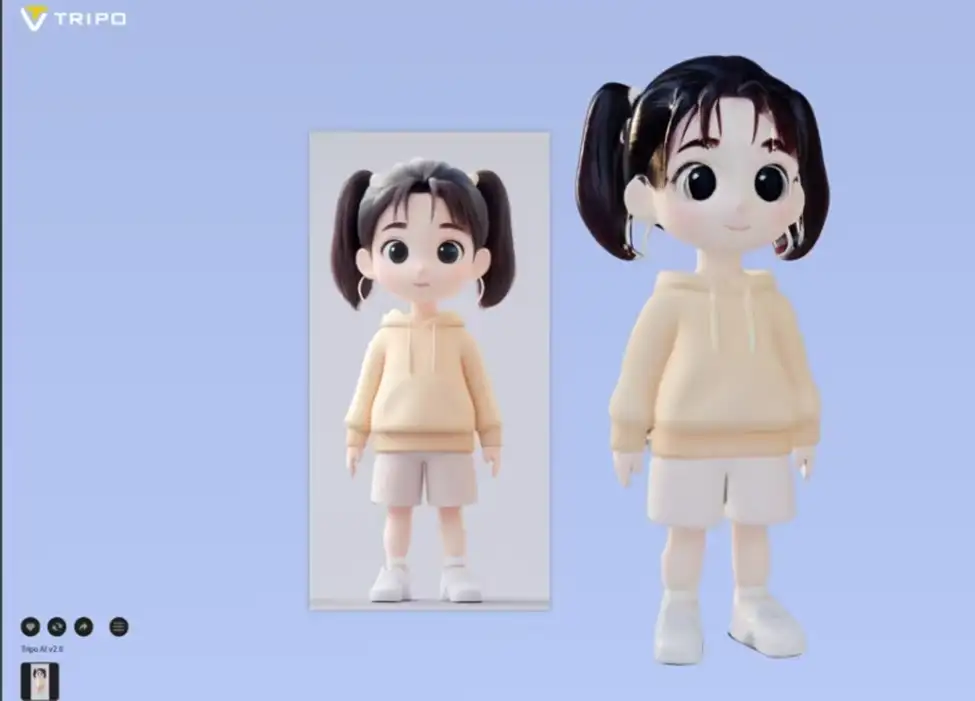
A promising tool in this space is Tripo AI, which offers high-precision 2D-to-3D modeling. However, its commercial applications are not yet fully realized.
Future AI tools should prioritize usability and practicality, catering directly to designers’ daily needs to improve efficiency and workflow.
(SOURCE:WYMAN-上海-3D建模师提供)
 CHINA FASHION BUSINESS
Leave a comment