
▼The following discussion in Leng Yun fashion community is a discussion and summary of industry issues. These shares are the crystallisation of collective wisdom. (They do not represent the personal views of Leng Yun). It is hoped that this method will benefit more industry professionals!

1、Current Status of Sales Associates’ Professional Competence
In the fashion retail industry, an excellent sales associate should possess the ability to “act at the right moment,” as well as traits of confidence, composure, enthusiasm, and infectious energy. However, the reality is worrisome. A typical example is when a customer asks about the material of a sweater, and the sales associate answers, “It’s knitted.” This lack of basic knowledge immediately discourages the customer from further conversation.
The recent evaluation results from our staff training reflect this issue clearly. Passion for service, physical stamina, product knowledge, and styling ability are basic requirements for sales associates. Yet, most women’s clothing stores lack systematic training in color theory, image management, and customer analysis.
Even those who have worked in luxury boutiques perform only slightly better. Knowledge about product and fabric remains extremely limited, and the professional growth of sales associates is rarely emphasized.
Most sales associates seem uninterested in developing professional knowledge. Even in major women’s wear brands, the situation is far from ideal. In over 50 interviews, including candidates from chain brands such as Girdi (Girdear), the overall professional competence remains unsatisfactory.
2、Memorable Shopping Experience Cases
A customer shared a recent experience at the Sketch store in Jimei Outlets. The sales associate recommended styles that matched expectations, accurately described product features, and proactively assisted with size and color changes. The entire service was efficient—no waiting required. The customer tried on more than five T-shirts and four pairs of pants, ultimately purchasing three. This level of professionalism left a strong impression.
Another case occurred years ago when the host conducted field research at GIADA. Although the host had no intent to purchase at the time, the sales associate still enthusiastically introduced the design concept and craftsmanship details of the new collection. The sales associate described the designer’s approach as “showcasing skill,” an expression that remains memorable.
3、Differentiated Customer Service Strategies
When shopping for clothing, customers care most about “what suits me” and “my style,” which relates to image management and design. Preferences for one-on-one service vary by customer. Some appreciate personalized service; others prefer browsing independently. If customers already know what they want and are short on time, they may opt for quick purchases; with more time, they prefer exploring. In general, one-on-one service is well-received.
There are many types of customers, and sales associates must learn to analyze their styles. A client’s facial features often correlate with their personality. Some customers understand their own style and need little assistance—they simply browse and buy.
4、Differences Between Online and Offline Shopping
In terms of shopping experience, offline retail excels in quality assurance. Customers can try on garments and feel the fabric, avoiding return issues.
Many online merchants buy sample garments and make alterations, which may deviate from the original design concept. Due to pricing constraints, production costs are cut, meaning consumers never actually receive the same garment as the influencer’s sample piece.
An interesting price comparison: a T-shirt at IT retails offline for ¥219, while the same style online costs ¥129 but requires a 10-day preorder. To save ¥100, many customers opt for online channels—the quality remains identical. In reality, this is a testing strategy: if a style sells well, it’s later stocked offline; if not, production stops.

1、Customer Types and Communication Strategies
Different customer types require distinct communication strategies. For students, assess their outfit choices to gauge purchasing intent and capacity; for parents buying on behalf of children, ask about height, weight, age, and style; for older clients, confirm whether suitable products exist; for new walk-ins or tourists, establish rapport and encourage account following; for returning customers without appointments, recommend new arrivals; for those with appointments, prepare looks in advance; for couples, determine who makes decisions and leverage that dynamic.

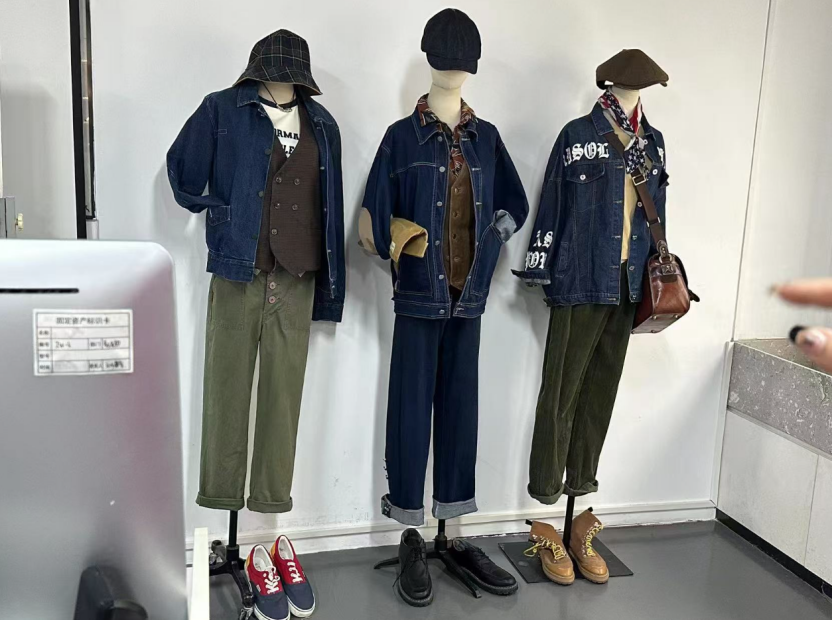
For instance, in a Japanese-style streetwear boutique with over 100 brands (mostly from trading companies’ export orders), most customers already know the labels. Therefore, building customer communities and sharing brand and fashion knowledge is essential—this long-term engagement steadily expands a stable client base.
2、Using Image Management Expertise to Attract Customers
Before analyzing customers’ style preferences based on appearance, one must understand the AICI (Association of Image Consultants International) system. Originating in Europe and the U.S., it is the foundation for the “Eight Style Types” theory. National Level-II Image Designer and Color Coordinator are professional certificates recognized by the Ministry of Human Resources, available in cities such as Hangzhou.
Each individual has unique tendencies within the eight-style coordinate system. Some lean toward a natural-classic look; others embody girlish or romantic styles; men may lean toward natural or dramatic types. Most people fall between two or three categories and can adapt across multiple styles. Rather than focusing solely on “style,” it’s more important to discuss “styling,” since everyone embodies multiple style dimensions.
For men, the main style categories include Fashion, Dramatic, Natural, Classic, and Romantic. Though menswear and womenswear differ, the theoretical logic is similar. Dramatic style refers to bold exaggeration—actress Ning Jing is a classic example, with her strong presence and striking outfits. Dramatic types suit bold colors and large decorative elements.
Fashion styles can also be categorized by different dimensions—era, ethnicity, designer, film, visual art, music, social ideology, and function. For example:
• Era-related: Ancient Greek, Gothic, Rococo, Romanticism, etc.
• Ethnic: British, Bohemian, Chinese, Japanese, Korean, etc.
• Designer-related: Chanel style.
• Film-related: Lolita style.
• Art-related: Minimalism, Futurism, Cubism, Surrealism, Pop Art, etc.
• Music-related: Punk, Grunge, Disco, Hip-Hop.
• Social Ideology: Androgyny, Camp, Hippie, Yuppie, Bobo, Cottagecore, etc.
• Functional: Sportswear, Uniform, Academia, Military, Workwear, Formalwear, Theatrical costume.
To understand fashion history, one must first study how the century’s fashion classics evolved—each style reflects its historical and social context. This knowledge is crucial for improving professional competence in the fashion industry.
3、Body Type Analysis and Styling Suggestions
Predicting clothing needs based on body shape is a key retail skill.
Men’s body types include H-shaped (most common), O-shaped, and T-shaped (inverted triangle). More intuitive types: short (165 cm), chubby, slim, muscular, or with a belly.
Women’s body types include H-shape, pear-shape, apple-shape, and inverted triangle (“strawberry”) shape.
Different body types require specific silhouettes and style adaptations. Men’s styles are generally easier—H and T fits dominate. In Japanese streetwear, layering and accessories are crucial.
The six Amekaji (American casual) styles include: Vintage Denim, Workwear, Military, Ivy/Prep, Biker, and Western. These emphasize strong layering and accessories. However, most Chinese men prefer understated cityboy or oversized Japanese casual styles.

For heavier men, looser silhouettes and structured T-shirts that create straight lines work best. Avoid overly bright colors; choose clean blue or light tones. TV host Du Haitao’s outfits are a good reference. Japanese streetwear’s relaxed fit suits larger frames well.
4、Color Theory and Application
Beyond body shape, personal color analysis is also essential. Women, in particular, benefit from recommendations based on skin tone and style.
The Four-Season Color Theory—derived from the AICI system and further developed by CMB (Color Me Beautiful)—was first introduced to China by Beijing SeMan Color Studio from Japan.
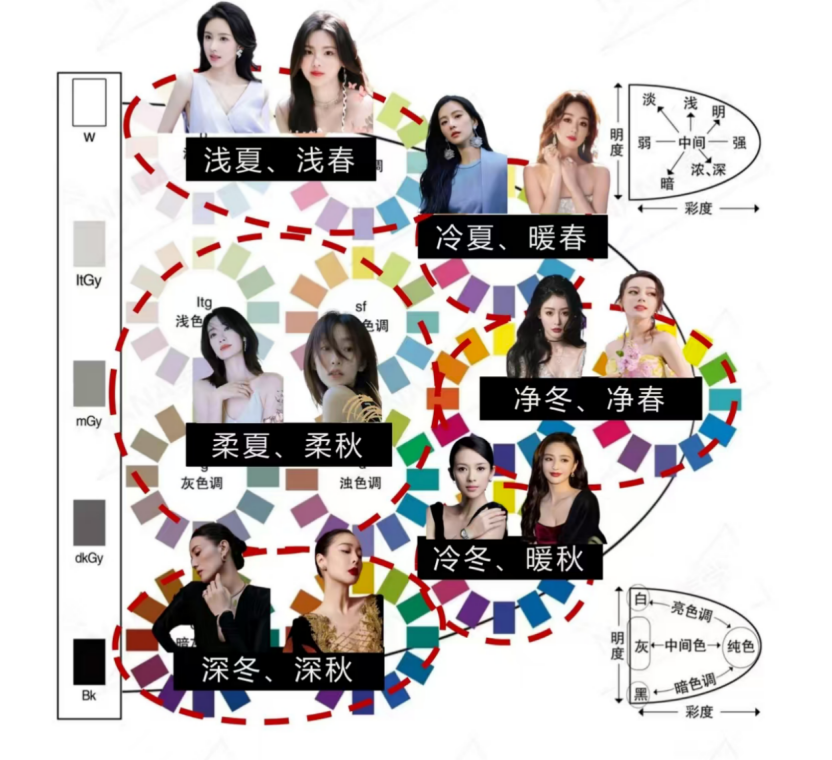

This system classifies skin tones based on color psychology. Some clients suit dark tones, some bright, others soft hues. Interestingly, most sales associates compliment customers for being “fair,” yet many perceive themselves as “tan” or “yellow-toned.” Such unprofessional flattery often backfires.


(Image source: screenshot from Xiaohongshu)
Color types include Deep, Light, Cool, Warm, Clear, and Soft.
• Spring type: suits orange-red and light yellow—vibrant and lively.
• Summer type: suits sky blue and lavender—soft and elegant.
• Autumn type: suits caramel and moss green—warm and mature.
• Winter type: suits sapphire blue and burgundy—cool, crisp, and confident.
An interesting case: one client intentionally tanned her skin to a golden oat shade and chose a very bright outfit. When advised it might make her look darker, she laughed and said, “That’s the point.” This confidence and aesthetic diversity are admirable—designers hope to see more customers like this in the future.
5、Sales Techniques and Customer Psychology
Different customers prefer different interaction styles. Some prefer minimal engagement—precise answers suffice. Interest in pairing items often signals purchase intent. In the Sketch store, for example, associates suggest pairing options by explaining scenarios—like how a green pair of pants can be effortlessly styled with a basic tee to elevate the look.
Customers trying to mix-and-match multiple items are more likely to make multi-item purchases. Outfit coordination drives upselling. Promotions like “buy more, save more” further encourage purchase, while boutiques without discounts may offer gifts instead. Customers exploring new styles seek self-expression—if the look feels right, they buy.
Those confident in their style maintain consistent aesthetics; others stay loyal to one look due to the cost of change.
The first minute of customer reception is crucial. A complete in-store process includes:
• Assessing customer demographics and type;
• Greeting and building rapport;
• Observing style and complimenting standout outfits;
• Gauging product interest through body language;
• Asking about needs, occasions, preferred colors, and styles;
• Presenting appropriate products and explaining details;
• Making multiple recommendations until satisfaction;
• Explaining promotions;
• Guiding checkout and encouraging social follow.

Unsold styles often have low try-on rates, average design, and higher prices; some feature difficult colors or unflattering cuts. Bestsellers, on the other hand, have high try-on rates, forgiving silhouettes, good value, and strong styling flexibility—most consumers prefer basics.
A good design balances creative expression and consumer acceptance. It should flatter the body, feel comfortable, and be versatile. From a sales perspective, the ultimate goal is identifying bestsellers.
Balancing personalization and mass production requires data-driven decisions. Today, more factories are open to complex craftsmanship. Most women’s wear stores still rely on intuition, but only data tells the truth. Previously, technical teams would remove complex details like pattern alignment. However, when such craftsmanship defines brand identity, it must be upheld.
The best-selling silhouettes are H-shape and A-shape. Beyond silhouette, the five design elements—form, color, texture, pattern, and accessories—all influence wearability. Many women favor fitted waists, and most have items they can no longer wear but keep for sentimental reasons.
From elevating sales associates’ professionalism to refining customer service, from systematic image management to aligning design and market needs—each link forms part of the complete retail chain.
Only through professionalism and dedication at every step can a brand thrive in a competitive market. Whether online or offline, data-driven insight and customer experience remain the core, while building a skilled sales team and service system is the path to lasting success.
PS:Translation is done by AI.
文字整理:张怀楷
文字编辑:张怀楷
美术编辑:李宁
 CHINA FASHION BUSINESS
Leave a comment