
▼The following discussion in Leng Yun fashion community is a discussion and summary of industry issues. These shares are the crystallisation of collective wisdom. (They do not represent the personal views of Leng Yun). It is hoped that this method will benefit more industry professionals!

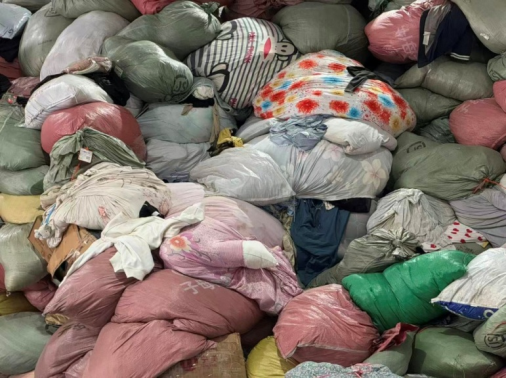
In today’s society, discarded textiles from both the industrial and consumer ends are highly abundant. For example:
Industrial textile waste: production scraps, defective products, excess inventory, unsold seasonal stock from apparel, home textile and cultural stores; replaced linens and uniforms from hotels, hospitals, and beauty salons, etc.
Consumer-end waste: old clothing, worn shoes and socks, bedding, curtains, kitchen cloths, car seat textiles, and more.
When dealing with these discarded textiles, the recycling and reuse process faces multiple challenges, such as:
Mixed-fiber textiles are difficult to recycle due to differing fiber properties;
The labor and operational costs of recycling are high;
Hygiene risks are significant—improper disinfection or washing may lead to bacterial contamination.
Consumers also use various recycling channels in daily life, including Feimayi, Aihuishou, Duozhuayu, and neighborhood recycling bins.
However, the downstream flow of some recycling bins remains unclear, making consumers cautious when deciding whether to recycle.
We can also recycle old clothing through vintage shopping or swap markets.
But some vintage items come with high markups, so consumers must be careful when purchasing.

Possibilities and Methods for Textile Waste Upcycling
There are many ways to transform discarded textiles, such as:
1. Breaking down recycled textiles into yarn;
2. Turning old nylon garments into hangers;
3. Remaking old garments into new ones:
Using one or several old garments as inspiration materials and reconstructing them into new, design-driven pieces;Using patchwork through garment deconstruction;Transforming categories—e.g., jeans into skirts, pants into tops, tops into bottoms;Adding decorative elements—embroidery patches or aesthetically pleasing appliqués to repair damaged or stained areas.
4. Old garments → other product categories:
Upcycling into bags, hats, pet clothing, shoes, cushion covers, rugs, coasters, mops, scrunchies, etc.
5. Adding interesting craft techniques:
Cutting old garments into strips and reweaving new textiles;
Patchwork (realistic or abstract patterns, or documenting moments of life through patchwork);Plant dyeing for natural fibers;Combining traditional crafts such as embroidery;
Printing via hand screen-printing or heat transfer.
Examples of textile waste upcycling:
1. Angel Chen’s designs using ethnic(Buzhibu) weaving
2. Uniqlo’s repair and remake service using localized embroidery
3. UOOSEE creating bags from recycled used tires
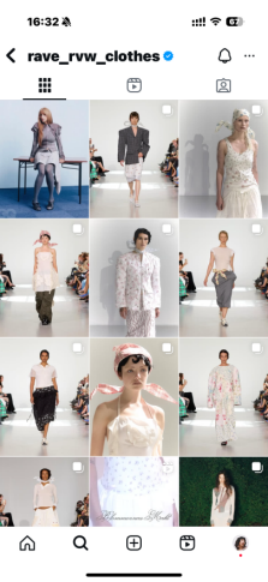
4. Rave Review upcycled fashion
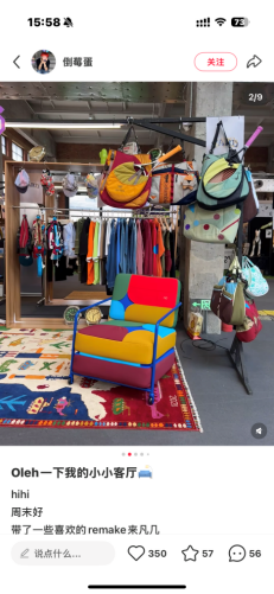
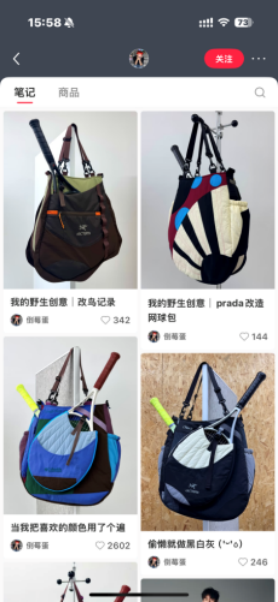
5. Daomeidan: bags made from recycled outdoor apparel
6. Patagonia Worn Wear repair & remake, more utilitarian
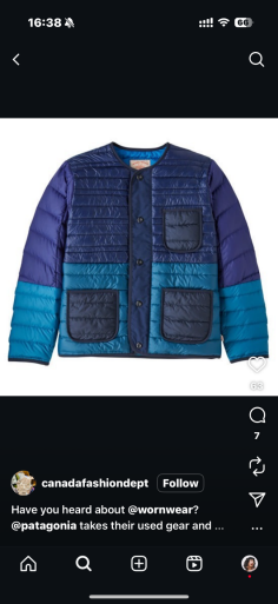
7. Adding embroidery textures onto old garments

8. Freitag bags made from truck tarpaulins
9. Patchwork craft
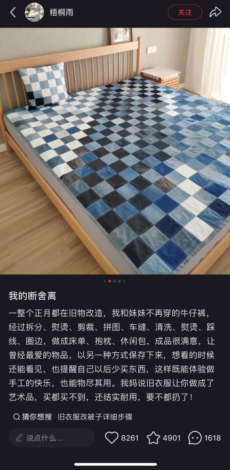
10. Recycled nylon garments transformed into hangers

Technology & New Materials:
1. e.dye waterless dyeing technology
E.dye uses plastic bottles to produce recycled chips and color masterbatch for waterless dyeing, then transforms them into yarns, fabrics, and webbings. These fabrics can be recycled again, forming a closed loop while significantly reducing water usage and pollution.
2. Patagonia NetPlus recycled fishing-net fabric
3. Advance Denim’s eco-friendly denim processes—e.g., botanical dyes and waterless dyeing
4. CIRC uses hydrothermal technology to separate and recycle polyester and cellulose, making PET-cotton recycling possible

5. INFINITY BLUE recovers synthetic indigo from denim waste
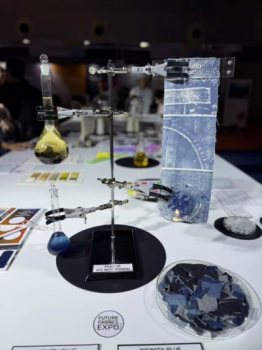
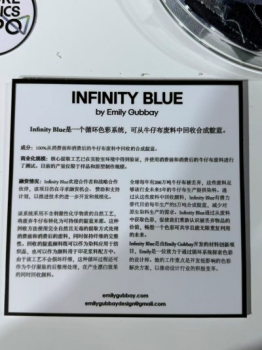

Advantages of textile waste recycling and upcycling:
1. Environmental benefits—water conservation, reduced carbon emissions—appealing to environmentalists and Gen Z consumers;
2. Remake products are one-of-a-kind, attracting buyers who value emotional or personal expression.
Challenges of remaking:
Difficult to scale or commercialize; sometimes overly “eco-themed,” lacking consumer appeal; the acceptance of second-hand clothing remains limited in China.
Advantages of remaking:
Uniqueness and strong personal identity expression.
Successful current model:
Uniqlo’s “light remake”—simple embroidery repairs that align with mainstream aesthetics and daily wearability.
How to balance environmental impact with aesthetics?
Use responsibly sourced regenerated fibers, high-quality materials, natural fabrics with textures, or plant-dyed textiles; pair them with clean, versatile designs suitable for multiple occasions for wider consumer acceptance.Using high-quality deadstock fabrics is also a good option.
How to balance “high cost of sustainable materials” with “consumer acceptance”?
1. Reduce costs during development:Choose manufacturers’ existing stock fabrics, piggyback on large brands’ base materials during small-volume production; negotiate long-term supply deals; produce locally to reduce transportation costs and simplify packaging.
2. Improve consumer education and value communication:
Show environmental data on tags and promotions (biodegradability, carbon reduction, recyclability, traceability); provide quantifiable data (e.g., “reduces water use by xx%”); offer added-value services like lifetime repair or buyback programs—to help consumers understand and accept green products.
Integrating traditional craft techniques can enhance remake designs—for example, joining cultural craftsmanship with modern silhouettes.
Policy context:
“The Implementation Plan for Accelerating the Recycling of Textile Waste” targets:
– 25% textile recycling rate and 2 million tons of regenerated fibers by 2025
– 30% recycling rate by 2030
Government incentives may encourage more brands to adopt recycled materials despite higher costs.
What if textile recycling becomes mandatory by policy?
Possible outcomes:
1. Greater supply-chain transparency; more genuinely sustainable suppliers
2. Improved technical capabilities and innovation
3. Higher product quality—design must consider full recyclability
4. Recycled products become mainstream; prices may align with regular products; consumer acceptance rises
Actions individuals or small teams can take:
Individuals: “Buy less, buy better, wear longer.” Resell, donate, or remake old clothes.
Small teams: Choose certified recycled materials; design with durability, usability, and circularity in mind.
How will textile waste be integrated into daily life in the next 5–10 years?
With policy support, technological advancements, and rising consumer awareness, textile waste will increasingly become recycled fabrics used for clothing, bags, shoes, and household goods.
Exhibitions may use more recycled textile materials as well.
Remake culture will grow, and consumers will pursue uniqueness.
Recycling technologies will continue to improve—I’m confident in that future.
PS:Translation is done by AI.

 CHINA FASHION BUSINESS
Leave a comment