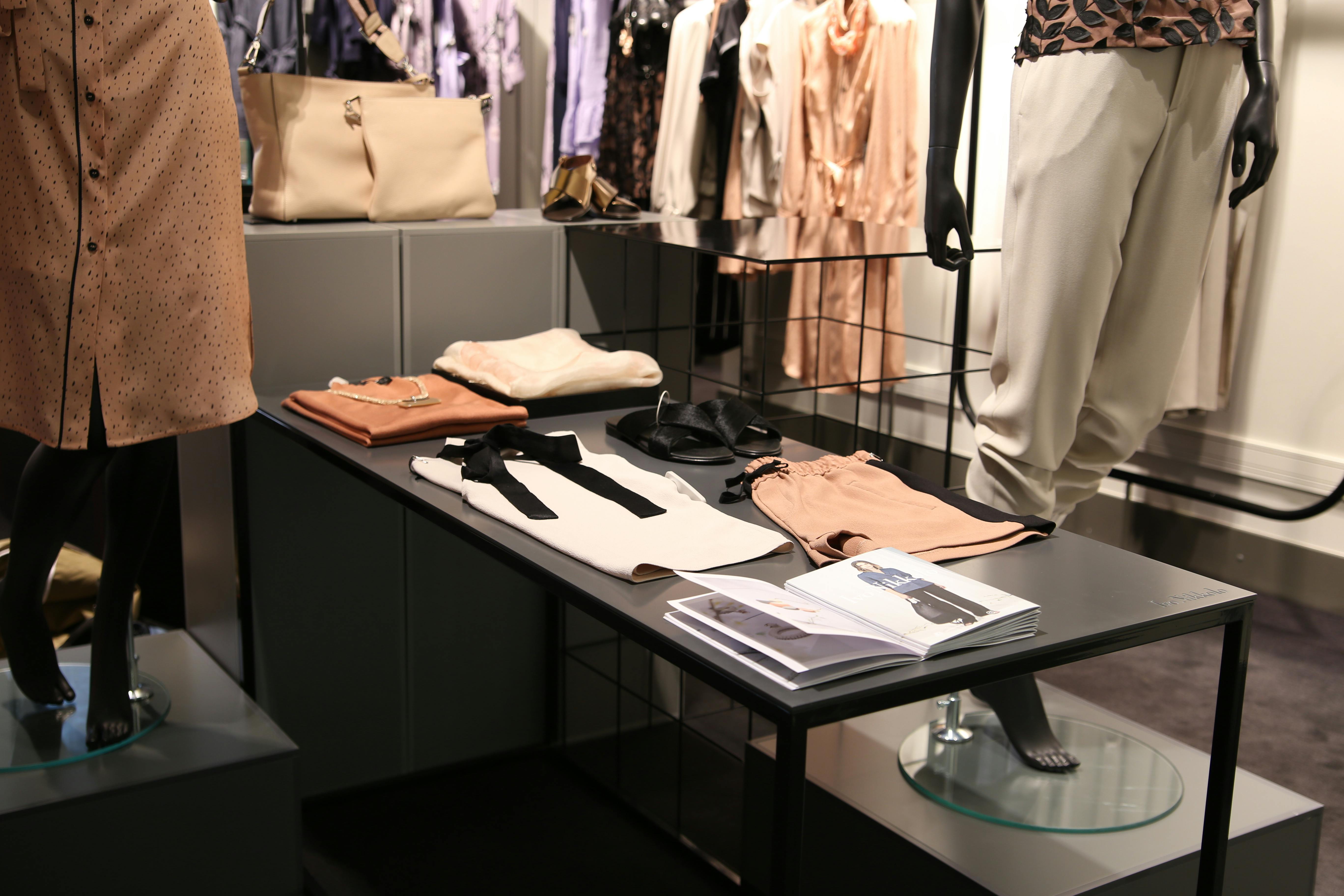
How Can Brands Stand Out Amid Cut-Throat Competition?

▼The following discussion in Leng Yun fashion community is a discussion and summary of industry issues. These shares are the crystallisation of collective wisdom. (They do not represent the personal views of Leng Yun). It is hoped that this method will benefit more industry professionals!

1. Sharing Business Status Quo
Some forum members said that clothing companies in Hangzhou are having a tough time recently—layoffs are widespread and competition is extremely fierce.
Nowadays, shopping malls are mostly frequented by diners. The buzz of internet-famous restaurants reminds us that people are always willing to pay for great experiences and social value. In sharp contrast, clothing stores are often left with only staff members.
For example, a forum member attended the opening of SM City Plaza Haicang Xiamen, which recorded over 80,000 visitors on the launch day. Many F&B outlets even had long queues, yet the conversion rate of clothing retailers remained remarkably low.
The host asked the forum members if they had considered renovating their stores to attract more foot traffic. The members replied that they had thought about it, but no one was willing to make large investments in store renovations given the current climate. On top of that, minor renovations would not create a noticeable difference for customers; while major overhauls without corresponding product upgrades would lead to customers walking out empty-handed, as they would find the merchandise unchanged from before.
Streetwear Stores
One forum member runs a streetwear store in a high-foot-traffic area in Shanghai, but the customer flow is not ideal. Fortunately, streetwear products have a thriving secondary market where prices can be driven up, resulting in a high average transaction value (ATV)—most orders exceed 3,000 RMB, which offsets the low foot traffic.
Another forum member observed a HOPESHOW store for 40 minutes and found that its conversion rate seemed quite good.
Brands like UNIQLO consistently maintain a steady stream of customers, whereas women’s clothing stores such as Hotwind rely on intermittent foot traffic, with many customers only trying on clothes without making a purchase.
Xidangcunwu
Many e-commerce clothing brands have now ventured into physical retail, with several popular shopping districts in Shenzhen dominated by such brands. Xidangcunwu has invested over 100 million RMB through financing to open direct-operated stores nationwide—all are large-scale outlets spanning over 400 square meters, with substantial investment in store design and ambiance to achieve its current scale and market presence. However, its actual store performance and return on investment remain questionable.
Xidangcunwu’s stores feature numerous well-designed decorative spots and pay close attention to small details in presentation. Its style caters well to young consumers with clear product matching guidelines. Some forum members commented that its clothing lacks distinctiveness, consisting mainly of generic or trendy items sourced from wholesale markets, with its main selling points being a wide variety of styles and large store spaces. Conversely, other members argued that the clothes are stylish and affordable, so even consumers aware of their wholesale origins are still willing to buy.
Aiyifu
Aiyifu, a clothing brand originally from Xiamen and later relocated to Guangzhou, offers very affordable products. A few years ago, it already boasted over 4,000 physical stores across the country and achieved an annual sales revenue of more than 4 billion RMB—all of its stores are located on street-front locations rather than in shopping malls.
Operating a store in a shopping mall incurs significantly higher costs compared to e-commerce or live-streaming channels. Savvy consumers often compare prices across platforms, meaning most in-store purchases are impulse buys driven by shopping experience. Thus, excellent in-store experiences and services will win consumer recognition.
Crying Center
The picture below shows Crying Center’s store opened in Zhengzhou last October, which has enjoyed a good flow of customers. Counterfeit versions of its products have also emerged in the market. The brand offers affordable clothing with good value for money.
masonprince
masonprince has opened a flagship superstore at UpperHills Shenzhen, with its interior decoration reportedly costing tens of millions of RMB. The store is filled with elaborate soft furnishings, creating a unique scenic view at every turn.
Some forum members shared that their customer base covers diverse occupations, including office workers, stay-at-home mothers, teachers and students. Most of these consumers have moved past the stage of relying on luxury brand logos to build self-confidence, and instead pursue distinctive aesthetic expression through clothing.
Their current marketing strategy does not prioritize paid promotions on platforms like Dianping. Instead, they focus on creating exceptional in-store experiences to encourage spontaneous sharing by customers. Word-of-mouth generated from these authentic user reviews is what they value most, as it serves as the most sustainable source of local customer traffic.
Why Do Physical Stores Fail to Attract Customers?
The core reason behind the lack of foot traffic in physical stores is that brands fail to translate their unique designs, exquisite craftsmanship, brand stories and the lifestyles they represent into tangible, relatable values that consumers are willing to pay for.
Therefore, brands must continuously optimize the in-store experience, transforming physical stores from mere sales spaces into brand experience centers.
Customers need to clearly perceive the difference between shopping in a physical store and browsing an e-commerce platform, and be certain that visiting your store will bring them joy—only then will they be motivated to come. In this era, for a brand to survive in the market, it needs not only outstanding products, designs and brand philosophy, but also strong financial support.
Cash flow is extremely critical, especially for buyout-based brands. In an environment dominated by cash transactions, a healthy cash flow allows a brand to sustain its operations without being pressured to chase quick profits. Who constitutes the customer base of buyout stores? They are consumers who seek differentiated, uniquely designed products—including teachers, students, self-employed individuals and ordinary office workers.
2. As Ordinary Consumers, What Do You Value Most When Buying Clothes?
Ordinary consumers usually prioritize brand reputation, product quality, price, material and brand values when making clothing purchases. The majority of consumers will first assess the product itself before considering the price.
Whether targeting the mid-to-high-end or mid-to-low-end market, the product itself is paramount. Even well-known brands will struggle if their products are flawed.
Some forum members pointed out that a common issue with domestic brands is the lack of diversity in color palettes. In contrast, certain international brands offer colors that enhance the wearer’s appearance. However, expanding the color range inevitably increases inventory risks, which is why most domestic brands opt for a limited selection of safe, marketable colors.
Most domestic brands simply follow the trends set by competitors, leading to severe product homogenization in the market.
For instance, when it comes to polo shirts and plain T-shirts, brands are locked in a race to promote higher thread counts—such as 100s or 200s cotton—while offering identical color options and adopting similar store designs. This problem is particularly pronounced in the sportswear and outdoor apparel sectors, partly because many brands hire the same interior design firms for their store renovations.
Following market trends is considered the safest approach that guarantees client satisfaction, which means that the intense competition plaguing the industry is actually self-inflicted.
The entire market is overly trend-driven, with brands trapped in a vicious cycle of constantly chasing the latest fads yet always lagging behind. The end result is a marketplace filled with indistinguishable products; brands lack memorable identities, forcing consumers to make purchasing decisions based solely on price.
The host opined that if more business operators embraced a long-term design philosophy—refraining from producing redundant products and resisting the lure of meaningless consumption—the world would be filled with more innovative and interesting designs.
For most business owners, clothing manufacturing and brand building are ultimately about making profits. Of course, some are driven by genuine passion and treat it as a personal endeavor, willing to invest without immediate regard for costs to create the products and designs they envision. But how long can such passion sustain a brand? Building a brand requires substantial capital investment; if the sole goal is to make money, opening physical stores is not necessarily the only option.

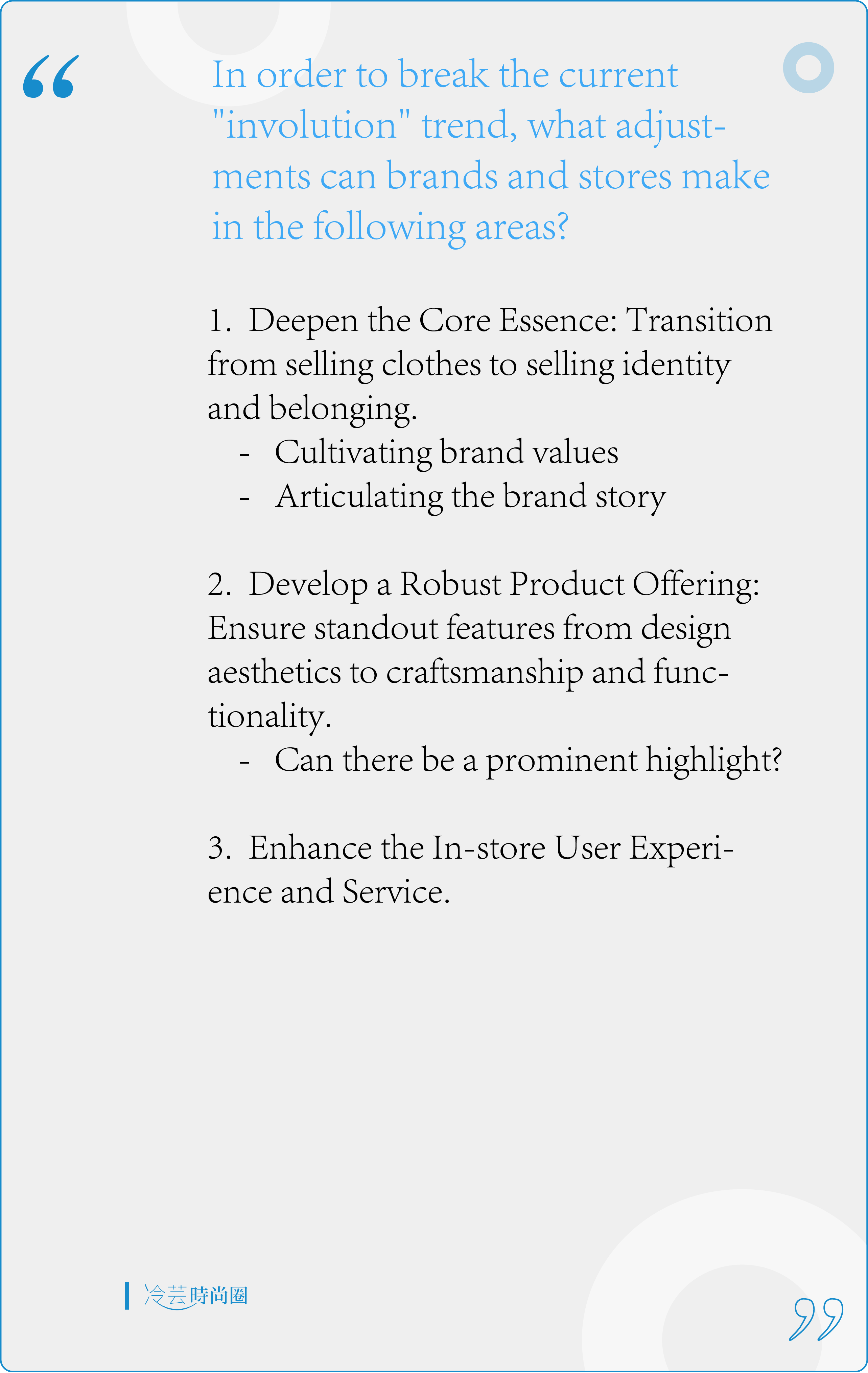
1. Deepen Core Values: From Selling Clothes to Selling a Sense of Identity
The host expressed great admiration for ZUCZUG, stating that it is the domestic brand that comes closest to her ideal vision of brand building. First and foremost, ZUCZUG has a clear brand attitude, exuding a sense of life and authenticity. Instead of engaging in excessive marketing, it gradually attracts and retains loyal customers through its interesting brand stories and initiatives, while simultaneously drawing in new consumers.
Consumers who identify with ZUCZUG’s brand philosophy will naturally appreciate the product styles of its sub-brands. By leveraging its philosophy and products to bring together like-minded individuals, the brand can gain valuable insights for product development directly from its loyal customer base. Product design should be rooted in our own lives, as well as the lifestyles that customers aspire to and resonate with. Co-creating products in this manner will strengthen the brand’s foundation.
Turn passion into a profitable business. We should not be ashamed of our desire to make money, nor naive about our passion. Transforming emotional enthusiasm into tangible market value that consumers are willing to pay for—this is the core of brand building.
The design of our brand’s products should be rooted in our own lives, serving as a reflection of the lifestyles we pursue. This should be the cornerstone of every new product collection. However, in reality, various challenges often lead to deviations from this principle. Due to cash flow shortages and lack of customers, brands often end up making compromises and straying from their original vision…
This is a harsh reality: clothing is fundamentally a necessity, but from a capital perspective, it is not a high-value-added or high-return investment, so the capital market is not particularly optimistic about the traditional apparel industry.
When the host learned about the story of Kenmei Nagaoka, she began to reflect on how to reverse the current predicament faced by brands—such as eliminating redundant SKUs. Some forum members questioned whether having too few SKUs would dampen consumer desire to buy. In response, the host argued that consumers may only need a variety of color options, rather than a multitude of similar styles.
2. Build High-Quality Products: Can We Create Standout Features from Appearance to Craftsmanship and Functionality?
Many brands currently prioritize following market trends, focusing first on survival before considering innovation.
This is a pragmatic approach, and one that the host herself used to endorse. However, she recently realized that this mindset might be the reason why her brand’s products failed to stand out, struggled to build customer loyalty and were constantly caught up in price wars. Last October, she revisited JNBY’s store at Tianmuli, visiting the art gallery, multi-brand boutique and several of JNBY’s brand stores in the area. She concluded that JNBY has been emphasizing product differentiation from the very beginning.
JNBY boasts a distinctive design language, with highly recognizable fabrics, tailoring and prints. Combining aesthetic appeal with intrinsic value is the key to success—great products speak for themselves. The brand has maintained a high level of customer loyalty over the years, consistently launching new products that, although only a small portion of its overall collection, perfectly embody JNBY’s brand philosophy. Its store design is also unique and distinctive, which is reflected in its strong financial performance.
Therefore, blindly chasing market trends is not a viable long-term survival strategy; sticking to one’s brand identity is far more important. Most brands that mindlessly follow the market eventually stagnate, go out of business or are forced into price competition in the low-end market segment.
3. How to Create a Memorable User Experience and Service?
Beyond upholding brand philosophy and continuously investing in product innovation, there is much that brands can do to enhance customer service. Physical stores still have strong vitality if they can deliver differentiated shopping experiences and humanized services.
Recently, the host has developed a keen interest in second-hand clothing. She is exploring the idea of offering clothing reconstruction services for customers’ old garments—a form of customized service that also encourages customers to reduce unnecessary purchases. She believes that older clothing items often feature more thoughtful designs and exquisite craftsmanship. This initiative aligns with the goal of reducing redundant SKUs, creating an irreplaceable selling point and establishing a deeper connection with customers.
Consumers will always be drawn to thoughtful, well-designed products. After all, basic everyday clothing can be purchased anywhere. Therefore, physical stores need to offer more designs that are infused with passion and personality, to encourage customers to visit and make purchases.
The host plans to host a small on-site clothing reconstruction event at the Fanji Market in December. Simultaneously, she will incorporate designs repurposed from the brand’s previous season inventory into the spring-summer collection, reintroducing these upcycled products to customers.
Vintage clothing teaches us that what transcends time is never fleeting trends, but sincere creativity and meticulous craftsmanship. When people buy vintage items, they are not merely purchasing second-hand goods—they are investing in quality that has stood the test of time and craftsmanship that cannot be replicated.
This elevates the brand’s value, transforming sustainability from an empty slogan into a tangible, participatory practice, thereby significantly enhancing the brand’s reputation and depth of customer engagement.
The host acknowledges that while it may be unrealistic to expect massive participation in such initiatives from the outset, consistency is key. Over time, as long as the brand stays true to its values, more and more people will be drawn to join in. For brands looking to break free from the cycle of price competition, the key is to follow their hearts and start by doing things that they themselves truly believe in.
PS:Translation is done by AI.
文字整理:周麟茜
文字编辑:周麟茜
美术编辑:李宁
 CHINA FASHION BUSINESS
Leave a comment